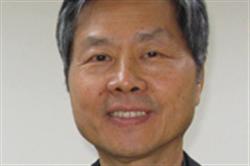
 | Te-Chien (Andrew) Chang retires as General Secretary of Presbyterian Church in Taiwan (Photo: WCRC/Greenaway) |
Te-Chien (Andrew) Chang is preparing to retire in July as general secretary of the Presbyterian Church in Taiwan (PCT) following 20 years of service in the General Assembly office in the country’s capital, Taipei. Chang’s service to the church has been marked by his deep commitment to Christian formation, protection of his country’s natural environment, and advocacy for the economic and human rights of the country’s Indigenous peoples. Under his leadership, PCT has remained true to its profile as a church that dares to speak out on public issues including the right to self-determination in the country’s relations with China. Chang is known too for his active involvement in global ecumenism. At his invitation, representatives of the World Communion of Reformed Churches, World Council of Churches, and Council for World Mission are regularly invited to participate in PCT’s annual general assembly and to visit mission sites throughout the country. Ordained in 1977 following studies towards an M. Div. in Old Testament studies at Tainan Theological College and Seminary, Chang became PCT’s Christian Education Secretary in 1990. His background also includes mission training with the Council for World Mission. Chang describes this combination of mission and Christian education as “two wings of a bird with the Holy Spirit giving lift to the wings.” In 2005 he assumed the role of PCT’s General Secretary. An accomplished photographer and regular blogger, Chang recognizes the importance of developing contemporary Taiwanese artistic expressions of Christian faith. “The gospel hasn’t changed in 2000 years but society has, so the church has to adapt,” Chang says. The General Secretary cites the example of his support for Christian street dancing in an area of Taipei that attracts up to 10000 young street dancers. A guitar-playing PCT pastor and his wife, who does street dancing, are regulars. PCT now organizes an annual street dancing competition among presbyteries that features teams from local parishes. One of the objectives of the General Secretary’s focus on contemporary arts is to overcome the image of Christianity as a “western faith.” “We need to use Taiwanese thinking for incarnational Bible stories,” Chang says. Chang sees the Yu-Shan theological seminary programme of inviting artists to stay at the college to create “theological art” as one example of this approach. The seminary’s arts initiative includes plans to display its collection of traditional aboriginal art in a new museum on the campus. Chang is proud too of the formation of a Christian artists’ fellowship in Taipei. For five years, artists have met monthly for theological reflection. The price of membership is to give one piece of art to the church’s General Assembly offices. As Chang moves into his retirement years, his active involvement in Taiwan’s life and challenges will continue. His plans include developing model programs with Indigenous peoples that will help them create and manage income-generating programs in local communities. The objective is to create jobs in the agricultural and arts sectors that will bring young people home from the country’s urban centres where they are often exploited and led into addiction or prostitution. This committed ecologist, human rights activist, and Christian arts promoter plants dreams, rooted in his deep Christian faith. The harvest will continue in the years to come. |